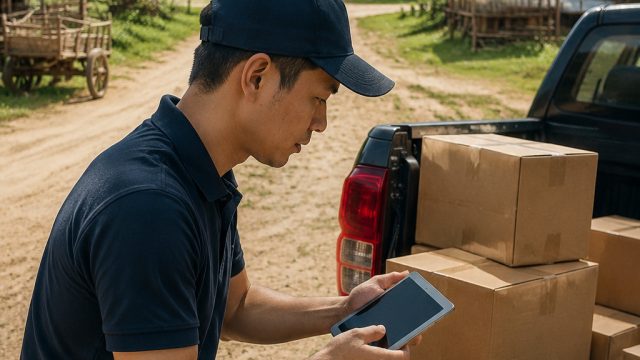
Rural e-commerce has achieved great results again. During the "Double Eleven Shopping Carnival" that just passed, the total order volume on rural Taobao was close to 20 million, and the transaction volume was close to 3.2 billion yuan, an increase of eight times compared with last year's Tmall Double Eleven. The sales of JD.com and Suning in rural areas also increased significantly compared with the same period last year. In addition to the three major domestic e-commerce companies, many e-commerce companies, such as Pinduoduo and Lecun Tao, also have outstanding performance in rural areas.
According to data analysis commissioned by the Ministry of Commerce, Yingchao Technology (Rural E-commerce Big Data Center), during the "Double Eleven" period in 2017 (November 1st - November 11th), rural online retail sales reached 84.608 billion yuan, of which online retail sales on the "Double Eleven" day reached 39.240 billion yuan, a year-on-year increase of 66.53%, accounting for 46.38% during the "Double Eleven" period.
In fact, since 2014, rural e-commerce has generally continued to receive attention. “Promoting the development of rural e-commerce” has been included in the No. 1 Central Document for four consecutive years. A series of policies are promoting the accelerated development of rural e-commerce, and major e-commerce companies have also entered the field of rural e-commerce: Alibaba's "Thousand Counties and Ten Thousand Villages" plan, JD.com's "Sparking Fire", Suning’s “Rural E-commerce”, Postal Service’s “Post Storekeeper”, Lenovo’s “Cloud Farm”, etc.
The achievements of giant e-commerce companies in the rural market declare the effectiveness of e-commerce companies in responding to the national call and accelerating rural layout. At the same time, we must also see rural e-commerce take advantage of resources to drive rural industry and economic development onto the fast track and promote rural development and revitalization.
The rural market currently has huge room for development and has become a "blue ocean" that major e-commerce companies are competing for. Major e-commerce companies are also constantly accelerating the construction of platforms and systems in rural areas. E-commerce platforms Alibaba, JD.com and Suning are typical representatives of the domestic e-commerce market.
In 2014, Alibaba announced the launch of the "Thousand Counties and Ten Thousand Villages Plan" strategy, planning to invest 10 billion yuan in the next three to five years to establish 1,000 county-level service centers and 100,000 village-level service stations. To date, Alibaba has established more than 28,000 village points in nearly 500 counties. Rural Taobao has nearly 1,000 dedicated employees, 28,000 "village waiters", and 50,000 service systems. In July 2016, Alibaba Rural Taobao has been upgraded to the "3.0 Strategy", and Cuntao Partners officially changed its name to "Village Xiaoer" on October 28, with the intention of using the new model to bring Alibaba's full ecological service system to rural areas and provide villagers with multiple service products covering production and life scenarios. Alibaba regards the rural strategy as one of its three major strategies, carrying the task of bringing the rural economy to the market.
In April this year, Liu Qiangdong announced that "in the next five years, JD.com will open more than 1 million JD convenience stores across the country. Half of them are in rural areas, found in every village. This is the third offline cooperation project after the 10,000 Jingdong home appliance store plan. "Industry insiders analyze that from the overall layout, this is JD.com's change of expansion ideas for the rural market and "penetration" of the rural market in a physical way. At the same time, the cooperative offline stores are an innovative complex of online and offline versions, which can become JD.com's distribution channel.
Suning is also increasing its presence in the rural market. In 2016, Suning.com invested 5 billion yuan to build nearly 2,000 Suning.com directly-operated stores, more than 1,900 Suning.com authorized service outlets, and 200 online local specialty stores, creating The 20 "most beautiful countryside" samples have increased Suning's logistics coverage in third- and fourth-tier markets to 87%. In response to the country's call this year, Suning.com plans to open another 1,000 Suning.com directly-operated stores in rural markets and continue to increase its rural e-commerce strategy.
In addition, data from the Ministry of Commerce show that Alibaba's "Thousand Counties and Ten Thousand Villages" plan has covered 30,000 villages in about 700 counties, with more than 30,000 partners, JD.com has recruited 300,000 rural promoters, and Suning has accelerated the localization process to build more than 10,000 service points.
"The overall pattern of changes in the Internet industry, urban e-commerce has been saturated, major e-commerce companies have begun to seize the rural market, and rural e-commerce that has been developing slowly has also begun to attract attention. Cao Lei, director of the China E-Commerce Research Center, told the reporter of China Business Economy News that although the rural business ecology has its complex side, its sufficient development potential is the highlight. white-space: normal; background-color: rgb(255, 255, 255);"/>
Hong Tao, a professor at the School of Economics at Beijing Technology and Business University and dean of the China Food (Agricultural Products) Safety E-Commerce Institute, said in an interview with a reporter from China Business News that rural e-commerce has developed rapidly since 2014, with continuous improvement of infrastructure, platforms (online and offline), and technology. The emphasis on the exploration of ecological products, coupled with the support of national policies, is an important reason why e-commerce has achieved great results in rural areas.
It is worth mentioning that Hong Tao believes that the development of rural e-commerce in recent years has not only formed a "new retail" trend of high-quality products and goods going to the countryside, but also constantly opened up new links for "direct supply and direct sales" of rural products into the city. At the same time, e-commerce platforms have begun to focus on building two major platforms, online and offline. Platform interaction, focusing on the exploration of ecological products and tourism resources, working hard on the quality and branding of new agricultural products, and promoting industrial poverty alleviation in the areas where the products are located. For example, officials from the Ministry of Agriculture recently publicly praised the "Luochuan Apple" industrial poverty alleviation model of rural e-commerce and promoted it nationwide.
In fact, e-commerce is already on the road to helping rural economic development. The social e-commerce platform Pinduoduo helped Miaojia Village in Huayin City, Shaanxi Province sell 15,000 kilograms of Shaanxi walnuts this year, sell 1 million kilograms of Zhongmou garlic in five days, and helped a poor village in Shaanxi open an online store to sell 700,000 red dates, solving the dilemma of difficult sales and poor sales for people in poor areas.
Targeted poverty alleviation as rural TaobaoIn this project, 1.7 million kilograms of Aksu apples produced in Xinjiang were sold on Tmall in just 12 hours. In addition, the 20 agricultural products jointly sold by Cuntao and Tmall achieved a transaction volume of 450 million yuan on "Double Eleven" day,
In the 10 hours of this year's "Double Eleven", villagers in Wanganji Village, Heze City, Shandong Province sold more than 4,000 four-piece bed sets, worth about 5 million. As for Heze, an underdeveloped urban area in Shandong, the rural areas are relatively backward, and rural e-commerce has directly promoted the development of poor areas.
Lecun Tao is also actively developing the rural market during the "Double Eleven", developing a model that combines offline and online, selling black rice from Gaoling Town, passion fruit from Longwan Township, original beans from various towns, and woven straw hats from Disu Town. From November 11 to 12 this year, Lecun Tao achieved online and offline sales of more than 80,000 yuan in agricultural products and handicrafts in Du'an, Guangxi.
Indeed, e-commerce has made many achievements in promoting rural industrial poverty alleviation and poverty alleviation. Data shows that online sales in comprehensive demonstration counties where e-commerce has entered rural areas have a good momentum of growth. The 756 comprehensive demonstration counties of e-commerce in rural areas achieved a total of 25.96 billion yuan in online retail sales, accounting for 30.68% of rural online retail sales. On the day of "Double Eleven", online retail sales reached 11.872 billion yuan, a year-on-year increase of 88.21%.
At the same time, national-level poverty-stricken counties have also achieved good results. The 832 national-level poverty-stricken counties across the country achieved online retail sales of 8.526 billion yuan during the "Double Eleven" period, accounting for 10.08% of rural online retail sales. On the "Double Eleven" day, online retail sales reached 4.263 billion yuan, a year-on-year increase of 102.48%.
The development of rural e-commerce has created a new industrial chain in rural areas, including product production, processing, warehousing, inspection, packaging, distribution, logistics and other links. The complete industrial chain is more helpful in driving employment.
"The problem of rising agricultural products and sending industrial products to the countryside is still not well resolved. Farmers have low informatization level and limited purchasing power. From a nationwide perspective, rural e-commerce has yet to find a truly successful model. ”
The layout of major e-commerce companies in counties and towns has increasedWith the rapid development, my country's rural e-commerce is facing good development opportunities: policy support has increased unprecedentedly, rural Internet penetration has increased year by year, rural residents' consumption power has gradually improved, and rural e-commerce personnel's employment has become increasingly localized. Rural e-commerce has become an emerging force that cannot be ignored in influencing my country's rural economic development and assisting rural revitalization, which indicates that rural e-commerce has good development prospects.